
Trusted and Reliable Telecommunication Construction Services
Quality Assurance at Every Stage
Branat provides comprehensive inspection services to ensure your telecommunications infrastructure meets the highest standards of safety, structural integrity, and compliance. Our inspectors evaluate towers, foundations, antennas, grounding systems, and equipment installations using detailed checklists aligned with industry codes and client specifications. Whether you need pre-construction site assessments, in-progress quality checks, or post-construction close-out inspections, our team delivers accurate, timely reporting that keeps your project on track and accountable.
Independent, Thorough, Reliable
We understand that thorough inspections protect your investment and your network’s long-term performance. Our process includes detailed documentation, photo records, and clear reporting that highlights any issues requiring attention, along with recommended corrective actions. By partnering with Branat for inspections, clients gain an added layer of assurance that their infrastructure is built to last and ready to perform from day one.
Experience
13 Years in business
Coverage
Present in 50 states
Our Partner Companies


What We Do
Tower Mappings
A tower is only as strong as the foundation it stands on, yet foundations are often the least-understood element of a structure. Our foundation mapping services document the dimensions, depth, rebar layout, and concrete condition of existing tower foundations — either through traditional methods or advanced non-destructive techniques. This data is essential when evaluating whether an existing foundation can support increased loading from new equipment or modifications.
Non-destructive rebar mapping uses specialized technology to locate and assess reinforcing steel without breaking ground or damaging the concrete. This approach saves time, reduces cost, and eliminates unnecessary disruption to the site. Whether you need a simple dimensional survey or a full subsurface rebar analysis, our team delivers the detail engineers and owners require to move forward with confidence.
Foundation/Rebar Mapping
Before any foundation evaluation, modification, or upgrade can move forward, engineers need accurate information about what's actually below grade — and that's exactly what foundation and rebar mapping provides. Our team uses specialized equipment to locate and document rebar placement, foundation dimensions, depth, and concrete condition, giving engineers the real-world data they need to assess load capacity and design upgrades with confidence. This service can be performed using traditional methods or non-destructive techniques that avoid disturbing the foundation entirely.
Foundation mapping is often the first step in any project involving increased loading, since assumptions about rebar placement or foundation size that don't match field conditions can lead to flawed engineering or costly surprises during construction. By mapping foundations accurately up front, we help ensure that every downstream decision — from structural analysis to upgrade design — is based on reality, not guesswork.
Pre Modification Mappings
Before any modification work begins, a pre-mod mapping ensures that the existing structure matches the assumptions built into the engineering drawings. Our inspectors verify member sizes, connection details, and current equipment configurations against the proposed modification plans, flagging any discrepancies before crews are ever deployed. Catching these issues early prevents costly change orders, delays, and safety hazards on the job.
Pre-mod mappings are a best practice that protects everyone involved — the carrier, the tower owner, and the crew doing the work. By confirming field conditions ahead of time, we help ensure that modification projects go smoothly from day one, with no surprises waiting at the top.
Modification Mappings (Post and During)
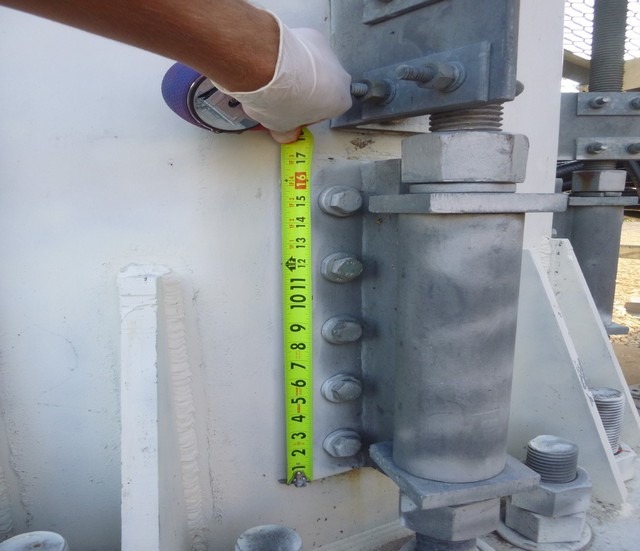
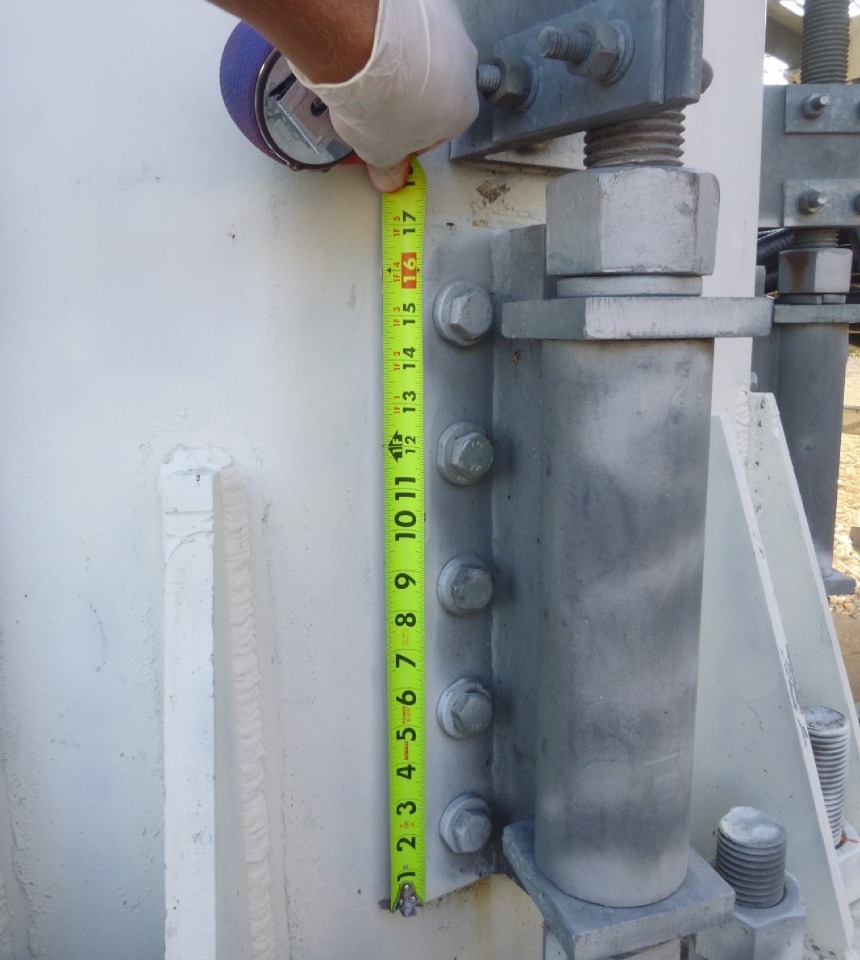
Modification mapping doesn't end when construction crews leave the site — verifying that the work matches the engineering is just as important after the modification is complete as it is while the work is underway. During construction, our team maps progress in real time, confirming that each phase of the modification is being installed correctly and matches the approved plans. Once the project is finished, we perform a post-modification mapping to document the final as-built condition and verify that everything was completed in accordance with the design.
This combined approach catches issues while they're still easy to correct and then provides a final, documented confirmation that the structure was built as designed. The result is a clear as-built record that reflects the true condition of the structure after modification — information that's essential for future inspections, additional modifications, or ongoing structural analysis.
Dig to Block (Anchor Rod) inspections
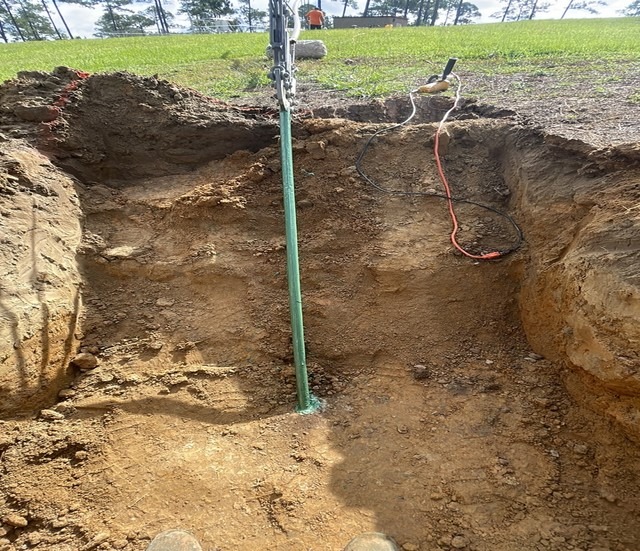
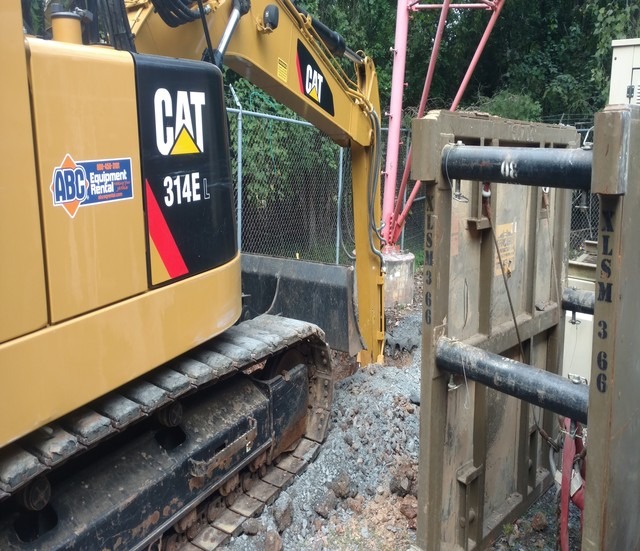
Anchor rods are critical structural connections, but the portion of the rod most vulnerable to corrosion — where it meets the concrete anchor block below grade — is also the portion that's completely hidden from view during a standard visual inspection. A dig to block inspection involves carefully excavating around the anchor rod down to the concrete block to expose and assess the rod's condition at this critical interface, where moisture, soil chemistry, and time can cause significant deterioration that goes undetected for years.
This inspection is particularly important on guyed towers and other structures where anchor rod integrity is essential to overall stability. Our team excavates with care to avoid disturbing the surrounding soil or foundation more than necessary, documents the condition of the rod and surrounding concrete, and restores the site once the inspection is complete. Identifying corrosion or deterioration at this critical point early allows for repair or replacement before the rod's load-carrying capacity is compromised.
Tower Maintenance Inspections (TIA’s)
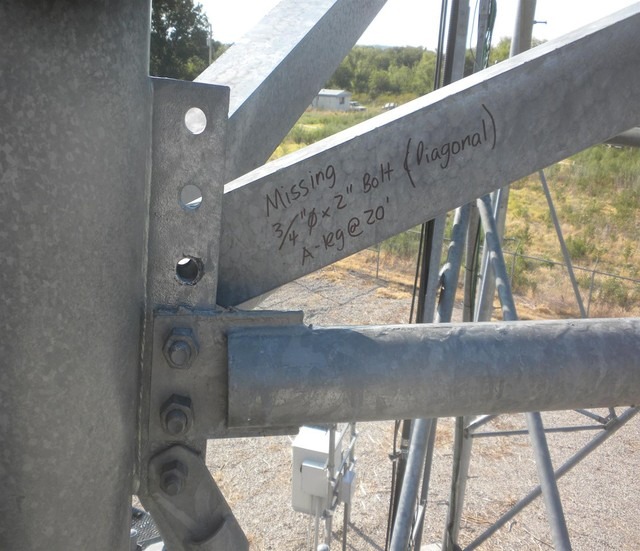
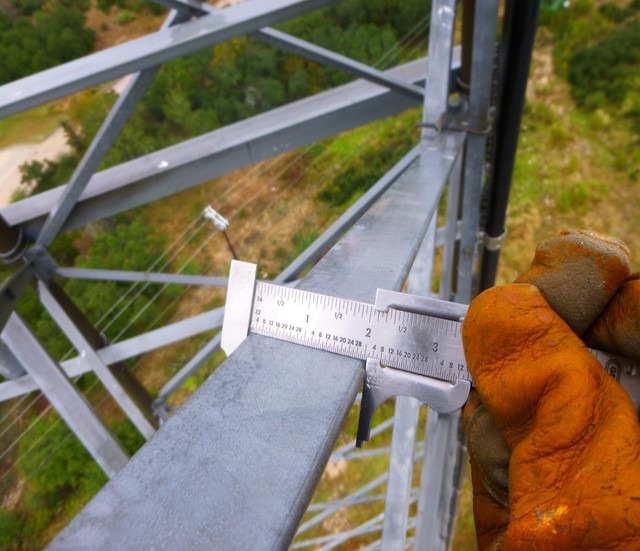
Tower Maintenance Inspections, conducted in accordance with TIA-222 standards, are the industry standard for evaluating the ongoing structural health of a communication tower. Our certified inspectors perform a detailed visual assessment of every accessible component — identifying corrosion, missing or loose hardware, bent members, damaged safety systems, and other deficiencies that can compromise structural integrity over time.
Regular TIA inspections are not just good practice — they are often required by lease agreements, insurance policies, and regulatory bodies. Catching maintenance issues early, like a missing bolt or degraded grout at the base plate, is far less expensive than dealing with the consequences of a neglected structure. Our thorough reports prioritize findings by severity so owners can plan and budget repairs effectively.
Certified Weld Inspections (CWI)
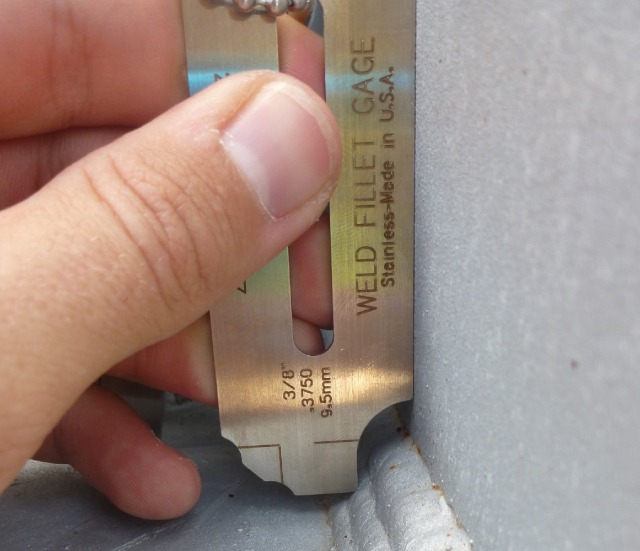
Welds are the joints that hold a tower together, and a flawed weld can be a catastrophic failure point under load. Our AWS Certified Welding Inspectors (CWIs) evaluate welds on new construction, modifications, and existing structures for quality, completeness, and compliance with applicable welding standards. We assess weld profiles, sizes, coverage, and the presence of defects such as cracks, porosity, undercut, and incomplete fusion.
CWI services are essential any time structural welding is performed in the field or when the integrity of existing welds is in question. Whether you’re commissioning new work or investigating a concern on an aging structure, our certified inspectors provide the qualified, documented assessment that engineers and owners can rely on.
Non-destructive Examination (Welds)
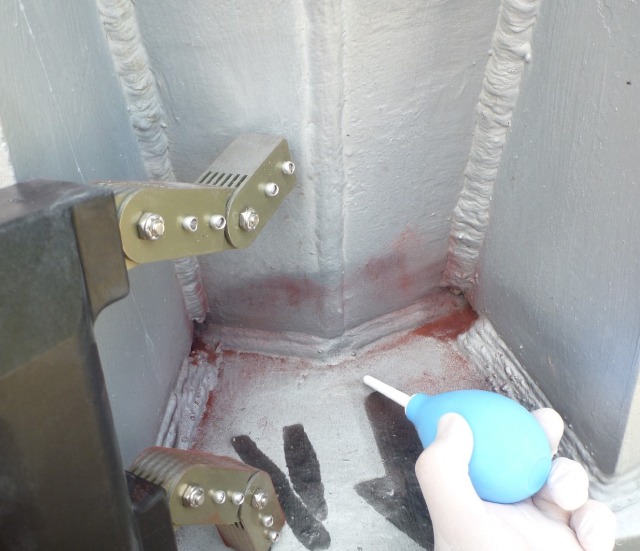
Weld quality can make or break the structural integrity of a connection, but many of the most serious weld defects — internal cracks, porosity, lack of fusion — are completely invisible to the naked eye. Our non-destructive examination services for welds use methods such as magnetic particle and liquid penetrant testing to detect surface and near-surface flaws without damaging the weld or the surrounding material. This allows us to verify weld integrity on new construction, modifications, and existing structures where weld quality is in question.
NDE of welds is often called for following structural modifications, after severe weather events, or as part of routine quality assurance on critical connections. Our qualified technicians follow recognized industry procedures and document all findings clearly, giving engineers and tower owners the confidence that the welds holding their structure together meet the standard they were designed to.